Montag, 14. Februar 2011

Sea Kayaking around Amorgos

This larger island is part of the Cyclades Islands and has a line of rocky peaks down its spine and long stretches of bright blue water along it's coastlines under 300 to 400 metre high cliffs (the film 'The Big Blue' was filmed here so the coastline may be familiar to you.). If you're looking to base yourself on one island or in a smaller region, Amorgos and the tiny un-inhabited islands off its Southern coast (The small Cyclades) which are only a few miles away from each other make a good choice. Though rocky these islands still have some green life on them and small secluded beaches waiting to be arrived at by kayak.
The paddling in this part of the Cyclades is relatively calm and there is a lot of sheltered terrain. It also helps that the peaks are so high because if it's blowy on one side of the island you can pop around to the other side to suit conditions.
Amorgos has two major towns, both with pretty white washed buildings and spectacular views. It also has a very famous monastery which has been built dramatically into the side of the cliffs. Only two monks live there now (they don't really get along that well either.) but they will give you a guided tour inside the narrow rooms built over 300 m on the cliff.

St Anton am Arlberg

For many, St Anton-am-Arlberg is both the cradle and Holy Grail of the skiing and snowboarding world. Ringed by majestic peaks, it has slopes of the highest calibre and a charming old railway town in which to celebrate the conquest – or attempted conquest – of those slopes. It is also close to other illustrious neighbouring ski areas – not just Lech and Oberlech, but Zürs, Stuben and St Christoph which are all available on the same lift ticket, giving the region a true embarrassment of riches. There are sweeping, beautifully groomed cruising runs, long, thigh-burning bump runs (particularly from the top of the somewhat hair-raising Schindlergrat lift at Schindler Spitze), daunting but exhilarating couloirs, and magnificent off-piste opportunities including (for brave hearts only) an exciting but quite severe descent from the very top of St Anton’s highest peak, the Valluga (9223 feet) down to Zürs). This is only permitted when you are accompanied by a qualified guide. Steep but much less daunting are the shortish, sharp descents through snowfields which filter into the Steissbachtal (Happy Valley) gully, the great homeward-bound route taken by so many skiers and boarders at the end of a day’s adventures. The Valluga slopes are the focal point for huge areas of off-piste and the starting point for the exhilarating run down to the picturesque village of Stuben. The delightful hamlet of St Christoph, high on the infamous Arlberg Pass, was an important and historic trade and military artery across the Alps. The five-star Hospiz Hotel, built on the site of an ancient hospiz where monks regularly rescued travellers overwhelmed by fierce storms, is one of the finest hotels in the Alps, and has a 14th century wine cellar right beneath the church.

Cruise the Danube

A Danube Cruise is a relaxing way to see some of Europe's most beautiful and historic cities. You're tied to this ancient trade route but you'll never be short a view of a castle, a medieval town to explore or a vineyard to stroll though, and you're passing though some of Europe's most famous capitals as well.
The river runs though Germany, Austria, Slovakia, Hungary, Serbia and Romania so there are hundred of potential itineraries. This one cruises the most scenic section.
These great rivers have so many ports to visit that even a journey of a single day gives a sense of the history of such a great and important trade route. And that is what this river represents, a great slinking, dragging, proud trade route though Europe, all her important cities, or those with the greatest wealth at least, line the banks in their historic glory, all pointed spires and crowded, yet beautiful architecture.

Cruise the Danube

  • Photo of Cruise the Danube
  • Photo of Cruise the Danube
  • Photo of Cruise the Danube
  • Photo of Cruise the Danube
  • Photo of Cruise the Danube
  • Photo of Cruise the Danube
  • Photo of Cruise the Danube
  • Photo of Cruise the Danube
Photo of Cruise the Danube
A Danube Cruise is a relaxing way to see some of Europe's most beautiful and historic cities. You're tied to this ancient trade route but you'll never be short a view of a castle, a medieval town to explore or a vineyard to stroll though, and you're passing though some of Europe's most famous capitals as well.
The river runs though Germany, Austria, Slovakia, Hungary, Serbia and Romania so there are hundred of potential itineraries. This one cruises the most scenic section.
These great rivers have so many ports to visit that even a journey of a single day gives a sense of the history of such a great and important trade route. And that is what this river represents, a great slinking, dragging, proud trade route though Europe, all her important cities, or those with the greatest wealth at least, line the banks in their historic glory, all pointed spires and crowded, yet beautiful architecturRegensburg’s 11th- to 13th-century architecture – including the market, city hall and cathedral – still defines the character of the town marked by tall buildings, dark and narrow lanes, and strong fortifications.
Kelheim is the Danube's first main port yet more journeys start at Regensburg, the river's oldest city, with the river's oldest and most ancient stone bridge. Built in the 12th Century the bridge splits the river, now just wide enough for proper river traffic, into 16 stone arcs, a fitting start to the journey.
The Danube gathers another two rivers into itself at Passu, which is also the first large town along the river's route. Passau is built around the bottom of a hill, on which sits the Veste Oberhaus – the fortress of the Bishop, and is surrounded by the rivers on most sides. The Bishop didn't just have a great Bavarian fortress though, he also had the Gothic gloriousness, St. Stephen's Cathedral, which, until 1994 had the world's largest organ. Organ concerts are held daily between May and September.
Linz, AustriaBetween Passau and Linz, Austria's third largest city - one that sprawls over both sides of the Danube - the river is lined with pretty villages. Until you reach a sudden bend: the surprising Schlögener Schlinge loop, where it feels like you have turned so far you're going back the other way. This hair-pin river turn is comes along just after Neuhaus.
WachauThe river then rushes through Linz, where Hitler spent his youth, but then slows down again so that it can irrigate the wine region of Wachau, where the hills are so steep that the white grapes are grown in terraces. Stop off to taste the local sweet Rieslings and peppery Gruner Veltliners sold in boutique wineries along the river's gorge.
On its meander between Melk and Krems, the river carves through a broad, hill lined valley famous for orchards as well as vineyards. Melk Abbey is a beautiful Baroque sight and has towers and architecture worth disembarking for, as well as an ancient library and walls hung with paintings of Austrian heritage and nobility, and if you do stop here, you must also venture down the medieval lanes and alleys of Krems and drink the Riesling the local people are so proud to produce. If you have only time for one day on the river this is the Danube at its most scenic and there is easy access from Vienna, which should probably be your next significant stop on your journey down river - but not before you pass a portion almost as lovely as this one, where castles perched on the rivers bend, including the lovely Schonbuhel Castle, follow every corner turned.
HofburgVienna is where, if you are cruising with a line rather than at your own leisure, you will want to spend more time than their itinerary allows for. You'll spot a Baroque church to the right, an Art Nouveau masterpiece to your left and be tempted by the strings of Strauss calling you from a concert hall, or the smell of coffee and fresh baking from a cafe. So do as much as you can, not missing the Hofburg, but remember that this as a journey rather than a city hop and return to experience more than just the graceful buildings that line the river and the at once delicate and historically permanent bridges that you pass under.
Bratislava, SlovakiaSlovakia's capital Bratislava follows Vienna; a city changed from capital, to suburb of Vienna, and back again, and the architecture of the city's centre is accordingly beautiful and historic as are its stories. Strolling round the old town, with its medieval gate, cobbled streets and Baroque and 18th-century rococo buildings and street cafés, is like strolling round in a fairy tale.
The most historic and scenic section of the Danube ends in Budapest, a city too many people neglect when travelling the Grand Tour, yet with as much heavy history as any other. Entering the twin cities all lit up in the evening, lights reflecting off the river, is a pleasure of the old fashioned variety. Budapest is older than it's European look projects – its Turkish thermal baths are a testament to that – but it's also modernising, so expect familiar foods as well as traditional flavours. Buda is the older section, where you can find the taverns and castles, where are Pest has the modern monuments and museums.
On the outskirts of Budapest the land changes shape from rolling hills of Buda to flat openness or Pest and the river again broadens...

Mittwoch, 2. Februar 2011

Archipiélago (Ponce, Puerto Rico)

 
Tired of the banking industry, native Ponceño Alejandro Vélez Blasini set off for the New England Culinary Institute in Vermont. After a successful run with a tapas bar, in mid-2009 he opened Archipeilago, a restaurant on the sixth and seventh floors of a building overlooking Ponce’s Parque de Bombas and Catedral de Nuestra Señora de Guadalupe on Ponces Spanish style plaza. The rooftop view is stunning, one of the best of any restaurants I’ve ever seen. The town square below glows at night.
Inside, there’s a high fashion crowd that rivals any scene in San Juan even the hostesses and waiters could be on Top Model. It’s as chic and modern as anything I have seen in San Juan, or Miami for that matter. Everyone is beautifully dressed and the scene of everyone dining on plates like Fried Cheese stuffed with guava and wrapped in prosciutto and Sancochado de Viandas gives the feel of some sort of Nuevo Latino photo shoot or telenovela.

Sonntag, 23. Januar 2011

Brasil a Gosto (São Paulo)

Brasil a Gosto, on a quiet tree lined street in São Paulo’s Jardins neighborhood, is one of those restaurants that teaches you as much as it feeds you. The restaurant was in fact founded after the chef Ana Luiza Trajano searched 47 different Brazilian cities across the country to complete an inventory of regional ingredients and recipes and then wrote a book, the same name as the restaurant, about it. Trajano takes many of those recipes, many of them usually found in dirt rooms shacks and market stalls, and presents modern interpretations in a contemporary dining room with high quality ingredients.
When I first sat down I was surprised that the chef came out to greet me even the restaurant was rather busy. Each day Trajano offers a different three-course executive lunch specials, as well as a local hot dish that originates in a particular region such as Minas Gerias or Espíritu Santo. I went with the executive menu of the day.
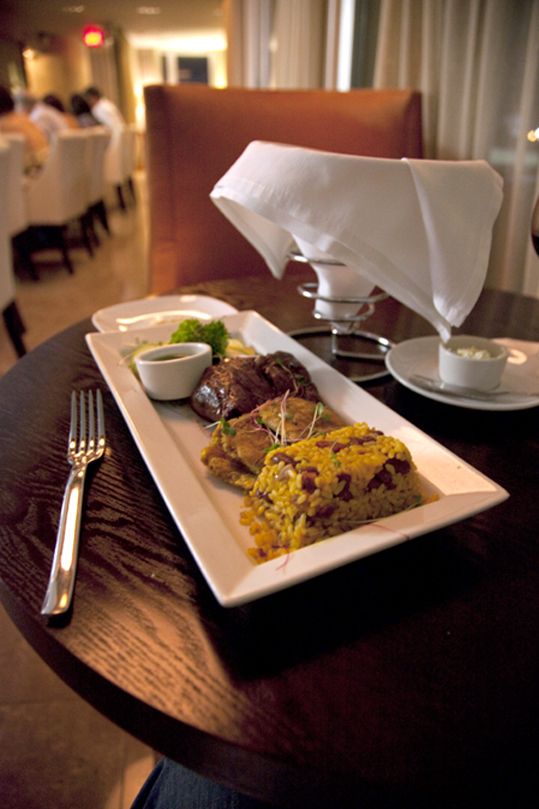
First came out a basket of mixed tuber chips (various bananas, yams, yucca) and fresh breads out of the oven that I’ll just assume are all traditional Brazilian recipes. Little dishes of Baru nut spread and a creamy cheese sauce flavored with parsley were sent out too. Next came skewers of grilled cheese curd (queijo coalho na chapa) drizzled in sugarcane syrup and a small dish of parsley pesto for dipping. So simple but it comes out looking so elegant. The main course consisted of slices of pork tenderloin with a deep red, smoky jaboticaba cherry sauce sided with a grilled banana and yam puree. Dessert was called a cocada, though it was unlike any cocada I have ever had. The baked, shredded coconut was served in a small bowl and a creamy custard like texture and and crunchy top like a crème brûlée. A more traditional crunchy cocada topped with lemon sorbet was served on the side. Every aspect of the meal was brilliant and tasted great.
I’m sad I didn’t have to dine here again on my latest trip to São Paulo. Trajano does amazing things with Brazilian ingredients. She makes a crust out of Baru nuts for Tilapia, the river fish Pirarucu is accented with lemongrass and ginger, and even goat appears with a creamy manioc sauce. The dégustation menu will have to wait. For now.
Brasil a Gosto feels like the rainforest with lots of natural light finding its way through the many plants that sit within (there’s several inner gardens including a vertical one) and surrounding the restaurant. Blown up images from the book of farmers, fishermen, and plants and woodcarvings add to this effect. It’s very much the tropical bistro I’ve always wanted to know.

Mittwoch, 30. Juni 2010

Nile River Journeys

The River Nile is long, with many ways to traverse her wide flat waters. Boats have been sailing the Nile on the puffs of breezes for centuries, carrying trade and people. The traditional dahabiya, felucca and sandal boats, the ones with the tall graceful sails and bows lying low in the water, and variations of, suit the waters and lack of wind perfectly and create a particularly romantic white-sailed scene, but newer yachts are now mixing in among the paddle steamers that ran her waters in the 19th Century. If you have your own boat to sail be aware that the waters are wide but that the riverbed is scooped and shallow.
The thing about cruising the Nile is that it’s a relatively simple trip, not at all challenging sailing wise, but it’s really the only way to carve through the desert and see the sights of ancient Egypt – this is, after all the way the Pharaohs traveled.
The main sailing route passes between Aswan and Luxor, while some people insist on going upstream towards the dam, the sailors route would always be downstream leaving Aswan and arriving in Luxor. Advice would be to see Abu Simbel before you take to your boat. The temples here, carved magnificently out if the rosy orange cliffs are a fantastic taster for what’s coming. If you have a guide they’ll tell you the temple had to be moved when the dam was built so it didn’t flood. Camel caravan would be nice, but if you don’t quite have time to really play Pharoh, you can fly. Aswan as a city is so much cleaner that Cairo. It’s a fusion of African and Egyptian design and culture.
Dock at Kom Ombo for the Temple of Sobek and Horus, which has beautifully tactile carved stone columns, and the Chapel of Hathor containing, to my children’s delight, the mummified remains of hundreds of crocodiles. At Edfu for a more famous Temple of Horus and at Esna the silt covered (or sunken as it’s often called) Temple of Khnum. But these are just leading up to the glory of Luxor, from where you visit the temples of Luxor and Karnak. On the other side of the Nile is the Valley of the Kings. When you’re walking amongst the temple pillars and see the Nile beyond, lined with farmers, this just feels like one the most amazing journeys imaginable.
Life on board isn’t as leisured and luxurious as an Agatha Christie novel. The desert is pretty impossible during the middle of the day, especially for people not used to it, so you have to time your temple visits for the mornings or afternoons. If you can manage it, mornings were less crowded in my experience.
A dahabiya is my recommendation if you’re renting a boat. Most often you’re renting them with a crew and other guests, but some companies will allow you to rent without, or else get something smaller if you want to sail it yourself. A dahabiya is a great for the wide, flat open deck, a perfect additional space for meals and picnics under the desert stars. The relaxed lifestyle of alfresco dining and living above deck really topped off the experience, which was always going to be amazing for the history and the desert, the crazy markets and the desert scenery.
October through February are the best months. The sand storms start up in late march.

Dienstag, 25. Mai 2010

Discover Egypt, wonderful place

Welcome to civilization! It may not look like it as you walk through Khan el-Khalili, Egypt's most famous market, but Egypt has over five thousand years of recorded history, and the society created by the successive pharaohs has been a blueprint for many peoples since.


When the name Egypt is mentioned, many first thoughts flit to the iconic Pyramids of Giza. The pyramids more than live up to their four thousand years of hype upon viewing, and although the sole survivor of the Seven Wonders of the World is swarmed by visitors, their majesty hasn't been diminished.


Also worth a visit are the museums that showcase this rich history, especially the Royal Mummy Room in the Egyptian Museum in Cairo. There's much more to do in Egypt however than just marvel at one of the cornerstone's of civilization. You can spend a day wandering round the colourful maze of markets, haggling with the local shop-keepers, try to find yourself a spot on the beaches of southern Sinai, or take a…

Mittwoch, 19. Mai 2010

Weather in the world

Sun lovers are spoilt for choice in July, but there’s more to a hot holiday than sitting in your backyard while the neighbours look through the fence as their barbeque billows smoke all over you. If you’re lucky enough to have the beach in your back yard then I’m jealous, if not here are some standard and some fresh sunny, beach-y suggestions for July jaunts.A tropical island paradise is as dreamily distant from your partially concreted backyard as is imaginable, and definitely qualifies as a ‘proper’ holiday – and frankly it’s been a hard year so a proper break is more desirable than ever. Curaçao is well loved by divers for its waters as clear and blue as Blue Curaçao, but it also ticks all the on-land boxes of a paradise, clean beaches, coral reefs and a really unique culture and cuisine which a lot of visitors, concerned mainly with what’s happening below the waves, miss out on. The other islands in the ABC group, Aruba and Bonaire are similarly dreamy, as is Tahiti – it’s actually slightly out of season for Tahiti and the Bora Bora famed perfection of French Polynesia so you may pick up a deal as well as avoiding the crowds.


St. Restitude Beach

The Med. doesn’t have the same fine, soft sand and warm seas as the tropical island paradise of your dreams but it does have beaches which catch plenty of sun, have cool, clear waters, are lined with tempting cafés, bars and restaurants and if you live in Europe you can expect to pay less for the privilege. Some of the Med.’s most frequently recommended are St Restitude, Golfe di Sogno Beach, Pampellone Beach, Plage de Tahiti, Terracina and Cap d’Agde, all with nearby resort towns promising accommodation of all standards and English speaking comfort.

If as well as heat a dream holiday means having some space on the beach to yourself you may need to fly north for the summer to the long sunny summer days of Scandinavia. UK paper ‘The Times’ proclaimed Norway’s Vestvagoy in the people-scarce Lofoten Islands the world’s most romantic beach, while the sand dunes, sun and surf of Sweden’s Gotland and Fårö are a Swedish teenager’s summer Famous-Five-style rite of passage. Even cooler customer Germany has something hot to offer in July, Rügen Island, it’s like the ‘Nice of the North’ – says Christopher Isherwood.

Freitag, 23. April 2010

Cebiche Causa de Divorico

Their patio tables sit in the parking lot right up against the cars, but that doesn’t mean Juez y Parte (Judge & Jury) cannot put out a mean cebiche. Here the specials are called the chef’s sentence. My verdict: Cebiche Causa de Divorcio (Ceviche that is the cause of Divorce). Octopus and Seabass are the defendents. Delicious.
*Side note: their Arroz con Mariscos is also one of the best in town.

Mittwoch, 14. April 2010

Peruvian Pisco Sour


The Pisco Sour is the national drink of both Peru and Chile and who makes the better cocktail is fiercely debated within both countries. In Chile, the drink isn’t blended, but shaken, lacks egg whites, and is served in a flute. Chilean Pisco is also sweeter. Sit them side by side and you’ll see that they are completely different drinks. Many Pisco Sour recipes list lemon juice instead of lime. This is just confusion in translation. Both Lime and lemon in Spanish is limón, which sounds a lot like lemon. However, in either Chile or Peru I’ve never seen a Pisco Sour made with lemon (though I have in the U.S.). There are many variations to the pisco sour that replace lime with passionfruit, chicha morada, coconut, tumbo, and camu camu.
For a strong Pisco sour, the best recipe is the 3-2-1: 3 parts Pisco, 1.5-2 parts lime juice, and 1 part jarabe/simple syrup. Two of these will knock you on your ass. The typical pisco sour is 2-2-1 and the recipe below (for one glass) reflects that method. Most recipes in Peru call for a non-aromatic pisco, like those from the Qiebranta grape.
Ingredients:
-2 ounces Peruvian Pisco (1/4 cup)
-Juice of 1 lime (key limes are similar in flavor to the Piuran limes used in Peru)
-2 tablespoons simple syrup (in Spanish, Jarabe de Goma)
-1 tablespoon pasteurized egg white
-1/4 cup ice
- Amargo Bitters (can be substituted with Angostura bitters)
Preparation:
1.) In a blender, combine the lime juice with the syrup and mix to dissolve the sugar.
2.) Add the pisco and ice and blend at high speed for ten seconds.
3.) Add the egg white and blend until frothy.
4.) Pour into a sour glass, add a few drops of bitters and serve.

Freitag, 5. März 2010

Hazelnut Crusted Mazatlan Shrimp

Playa del Carmen, Mexico is a city that didn’t really even exist 15 years ago. It’s surrounded by jungle, now the city has been infiltrated by hundreds of hotels and even more restaurants, many of which serve stylish, contemporry food. Being that there was nothing here before and Cancun was never exactly a gastronomic hotspot, where do the chefs come from?
Gianpaolo Ferrera was born in the small Sicilian town of Ragusa. At 14 he began studying gastronomy in Palermo and soon set off around the region – Greece, France, and Switzerland. At 19 he began cooking in hotel restaurants in London, Melbourne, the Canary Islands, Madrid, and finally Cancun in 2004. Last month he opened Indigo Beach Club, a sleek beachside bar and restaurant and restaurant in the Balinese themed El Taj condo hotel project in the heart of Playa del Carmen.
Ferrara’s menu is follows his youth in Italy, his travels around the world, and his recent past in Mexico. Fresh beachside food like Passionfruit Ceviche, Thai style Tuna Sashimi, Crab Wantons, Lobster Tacos, and Red Tuna Tostados cooked pibil style (baked inside banana leaves). There are also heavier dishes like burgers and hand rolled tortellini, though the restaurant’s signature are the southern Italian style , thin crust pizzas from the their wood fired oven. They’re topped with things like shrimp and pesto.
Indigo Beach Club
Playa del Carmen, Riviera Maya
Mexico
www.indigobeach.com.mx

RECIPE:
Gianpaolo Ferrera’s Hazelnut Crusted Mazatlan Shrimp (over mango and watercress salad with apple vinegar and pink pepper)

INGREDIENTS:
-8 Oz Mazatlan Red shrimp (any jumbo shrimp will work)
-2 Oz Hazelnuts, ground:
-4 Oz Tempura (1 egg, 1 cup spring water, 1 cup flour)
-1 Oz Watercress
-2 Oz Mango Ataulfo
-2 Tbs Apple Vinaigrette
-1 Tbs Balsamic vinegar
-Salt and pepper
-Vegetable Oil
PROCEDURE:
1.) Peel the shrimp carefully trying to keep intact the head and tail.
2.) Prepare a classic tempura with ice-cold spring water
3.) Season the shrimp with salt and pepper
4.) Dip in tempura and then “bread” with the grounded hazelnut.
5.) Put the shrimp freezer for at least 20 minutes
6.) Put shrimp direct from freezer into vegetable oil (2 inches deep) until the hazelnuts are golden brown
7.) Prepare a salad with watercress leaves pure and mango cubes of 1 cm, and season with apple vinegar.
8.) Place a single shrimp over salad, garnish with Balsamic vinegar and pink pepper.

Hong Kong's Evening Light Show

Paris may be known as the city of lights, but Hong Kong has got it beat when it comes to beams of illumination setting the harbour ablaze.  Known to be one of the most spectacular skylines in the world, Hong Kong boasts an impressive display of skyscrapers and it is none too humble to show them off every evening.
Having the world’s largest continuous light show every night at 8:00 Hong Kong’s skyline is ignited with lasers, neon lights, halogen lamps and every other sort of bulb that can illuminate the city.
Hong Kong during night time light show
We stayed in the Kowloon district, an area looking over Victoria Harbour at the vast skyscrapers of Hong Kong central.   At night, make your way down to the Hong Kong Cultural centre of Kowloon and set up your tripod by the clock tower.  Get there early as the crowds are fierce and photographers compete for the best vantage point.  It is here that you will see a fabulous display.
The light show itself is not an impressive piece of theatre, but to see the buildings light up in different colours and patterns is worth the pause in your evening events.
If you are staying in Hong Kong central on the North Side, make your way to the Star Ferry terminal and either go over to Kowloon or take a cruise for the night to watch the show from the centre of Victoria Harbour.   The show lasts for about a half an hour and it is completely free.
Victoria Harbour at Night Hong Kong
The Bank of China is the centerpiece of the show as it changes its diamond patterns of lights regularly flashing constantly to different colours, rhythms and shapes. I.M. Pei’s masterpiece is turned momentarily to a new age work of art.

Hong Kong is certainly more impressive at night, but it is worth a look around during the day as well.

We made our way up with the rest of the crowd to Victoria Peak.  The Peak Tram has been operating since the turn of the century and costs mere $36 HK Dollars for a return trip.  If you can handle the lines, it is worth going up to have a bird’s eye view of Hong Kong at 552 metres above the harbour.  You can even get your Christmas shopping in, as there is a massive mall and eateries at the top for a person to spend an entire day touring around.
View of Hong Kong from Peak
There are hiking trails and biking trails too.  We saw the Hong Kong Adventure racing team working out on their mountain bikes and wished that we could take one for a spin ourselves.

Time was limited in Hong Kong

Hong Kong is expensive and we had to pack as much in as we could in the 3 short days that we were there.
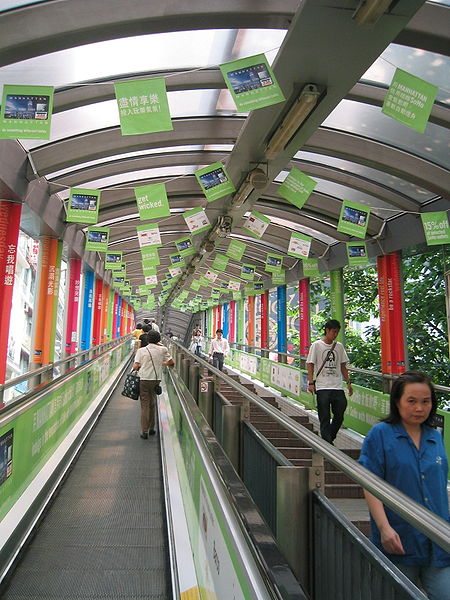
As luck would have it, an outdoor festival was going on in Soho during our visit.  Soho used to be a run down old style apartment block, but in recent years it has had a facelift turning into a trendy eateries.  It boasts the world’s longest escalator. At 800 metres, it makes the hillside neighbourhood steps a non-issue for visitors and residents alike.
The escalators go up all day from 10:00 am to midnight, but are switched to the down positions for the morning rush hour.  It takes 20 minutes to ride it to the top, but you can hop on hop off at any time. As there are openings for every street.
mid-levels-escalator-hong-kong
Escalators in Soho cover 800 metres
The outdoor festival felt as if we were in New York City as opposed to the Far East.  Cirque du Soleil was performing, jugglers walked through the cobblestone streets, Opera Singers serenaded us as we ate our Cuban food and enjoyed a discounted glass of wine due to it being wine month in Hong Kong.

Hong Kong a World City

The weather was perfect at a balmy 28?C, the sun was shining through the smog and we could almost see completely blue skies.  Yes, I think that we could live in Hong Kong. Now if only we had jobs suited to the high lifestyle that so many people seem to live.  Hong Kong is one of the most vibrant cities we have ever visited.  It has a modern cosmopolitan feel, but if you look hard enough, you can find pockets of its rich history.
Crowds at Soho Hong Kong
We ended our time in Hong Kong with a visit to the Man Mo Temple.  Known for its coils of incense hanging from the ceiling, it makes for an interesting photo opportunity – even though there are signs stating clearly “No Photos Allowed Inside.”  We joined the rest of the Chinese tourists that were happily snapping away.  At first we weren’t sure if we should take any photos, but when we saw everyone inside blatantly taking them right in front of the staff, we decided that it would be all right.
Man mo temple interior hong Kong
Man Mo temple is greatly significant in the community.  Under the management of the Tung Wa group, it subsidizes recurring expenses in the community.  Using the surplus from the Man Mo Temple and 12 other temples in the Hong Kong district, it offers a wide range of medical, educational and community services in 223 centres around the city of Hong Kong.
With funding from the Man Mo temple originally, Tung Wa started the first free school in Hong Kong in 1880 and has expanded to 52 schools today offering free education to underprivileged students.
I thought that we would simply be visiting yet another temple in our travels, but I was pleasantly surprised to see the great work that the Man Mo Temple has done.
Sky Scrapers of Hong kong Central
We spent 3 delightful days in Hong Kong and could have easily stayed longer.  We even managed to buy a brand new tri pod for Dave at the highly recommended camera store Echo Photo and Audio LTD on Hankow Road in Kowloon.  They were excellent to work with and saved us over $50 Canadian had we bought it at home.
We managed to do it all during our short time in Hong Kong, we shopped, we ate we saw the sites.  We look forward to going back one day when we have the time and funds to truly appreciate everything that it has to offer.

Dienstag, 2. März 2010

La Cabrera (Buenos Aires)

While there is some debate over this, both in Buenos Aires and out, most critics point to two parillas, or steakhouses, for the best meat in the city. Cabaña Las Lilas in Puerto Madero is the flashier, more expensive, and harder to get into of the two restaurants, though I’m still going with La Cabrera, with two nearly side by side restaurants in Palermo Soho, as the best steakhouse in Buenos Aires.
It’s hard not to find good beef anywhere in Argentina. In Buenos Aires there are a dozen top steakhouses that would rank among the best anywhere in the world and hundreds of fine parillas in the city. When I arrive at 11pm for dinner there is a line out the door and several well-dressed couples are sipping champagne on the sidewalk. I put my name in and the hostess pours me a glass too. Before I finish she mentions that they have a table opening up at their other restaurant down the street, La Cabrera Norte.
“Where down the street?” I ask.
“Right over there,” she points.
It was literally a few buildings down and I could see others holding glasses of champagne in front. I walked over and after a few minutes they showed me in. What is it about Argentine beef that makes it so special. First of all, the beef is grass fed, not corn or grain fed. Hormones are rare too. It comes from vast prairies that cover much of the country and extend all the way until the ends of Patagonia. I have a theory that any sort of ingredient taste better when it is raised or grown in a beautiful place. The more natural and far away from the things of man the better. This would be a big plus for Argentine beef if my theory proves true.
It was just me dining that night, so I had to pass on the morcilla (blood sausage), mollejas (sweetbreads), provoleta de queso de cabra (grilled goat cheese), chorizo, or any of the other appetizers and instead just focus on the meat and the many accompanying sides. Though the Bife de Chorizo (Sirloin Strip steak) was tempting, I order the Ojo de Bife, or the rib eye, or the Longissimus dorsi muscle. I ordered it medium rare and it came full of fatty, buttery flavor. There was just a bit of char. I’ve had more expensive cuts, Wagyu, Kobe, you name it, but La Cabrera’s Ojo de Bife ranks right up there at the top. Every other cut of the cow (or pig or lamb or chicken) is offered too.
“To try the meat with different flavors,” my waiter said to me in English as I stared at the 13 different little sides he brought out. There was Butternut squash puree, mashed pumpkin with raisins, beet purée, sun dried tomatoes, white beans, caramelized onions, baked pearl onions in red wine, and several others. I could have just eaten the sides and have been full. After each bite of meat I would sample one of the sides and the combination produced something new and exciting. This was meat in a whole new light. New earthy, deep, and smoky flavors came out. Malbec only made it better.
With decent bottles of wine being so inexpensive in restaurants in Argentina, most don’t have a wide selection of wines by the glass. While La Cabrera’s selection isn’t extensive, they do offer three levels of wines (a reserve, middle, & standard). I started off with the reserve, the very drinkable; smoky, smooth Trapiche Malbec Fond de Cave 2008. Then finished with a Septima Malbec.
After my meal the waiter plopped a lollypop tree on my table. I would have walked away smiling without it.

Dienstag, 23. Februar 2010

Francis Mallman 1884 Restaurante (Mendoza)

Francis Mallman is Argentina’s most identifiable chefs. His signature restaurant, 1884, in Mendoza is the preeminent restaurant for meat in the world’s most preeminent meat country. His book, Seven Fires: Grilling the Argentine Way, is basically the bible of cooking Argentine meat. The emphasis on the food here is rustic. Many dishes are cooked over an open fire or in a clay oven. Mallman gravitates not toward the European influenced kitchens of Buenos Aires, but the gaucho ways of Patagonia and beyond. Many come here with high expectations of fine cuisine, but some leave disappointed, as they don’t completely understand the chef’s ideology. This is cuisine that can be traced to the very heart and soul of Argentina. It’s presented beautifully, but don’t expect molecular gastronomy here or tiny bite size dishes with foams.
The food is earthy and seasonally based. In fact the menu changes every two weeks. It utilizes Mendoza’s rich cornucopia of produce to pair with the meat and wine. It’s the perfect trifecta. A recent visit saw a salad of roasted pumpkin and a perfectly cooked and seasoned Ojo de Bife (Rib Eye) with chimmichurri over crispy Andean potatoes. Service is proper but not stuffy. The restaurant tends to attract a considerable amount of gringos. Prices are reasonable for the quality and celebrity and are on par with most bodega lunches in Mendoza. Portions are big and hearty and are paired with a wine list that extends to 75 pages (probably more by the time I finish writing this).
1884 is set in a corner of the Escorihuela bodega, in the Godoy Cruz neighborhood just outside of the center of Mendoza (a cab can get you there in 15 minutes). Upon entering the Romanesque building you find the narrow bar area to the right and a large garden area with a few tables to the left. You can sit for a drink at either section while waiting for your table to open up (reservations are a must). In the garden courtyard you can watch the chefs stoke the wood fired grill and clay oven and slice up beautiful cuts of flesh. The restaurant is the most iconic Mendoza food experience.

Francis Mallman 1884 Restaurante
Belgrano 1188
Godoy Cruz
Mendoza, Argentina
Tel: 261 424 2698
Daily 8:30pm-12am

Samstag, 20. Februar 2010

La Rosa Nautica Headed to Bogota


Lima, Peru’s famed seafood restaurant La Rosa Nautica, which is set on a pier that extends a hundred meters from the city’s shore into the Pacific ocean, is opening its second restaurant in Bogota, Colombia.The restaurant should be open by mid-December 2010. They are also planning to open a third La Rosa Nautica franchise in Argentina. The restaurant in Lima sometimes gets knocked on by critics because the high number of tourist buses that frequent it, though the setting is spectacular and the food, most notably the ceviches and fish dishes, are always consistent. When I have family in town, it’s usually the first or last place we go. This is not the first Peruvian restaurant to expand to Bogota. Gaston Acurio’s La Mar and Astrid & Gaston have established themselves in the Colombian capital, as has Rafael Osterling’s Rafael.

Mittwoch, 17. Februar 2010

St. Martin: Home away from Home?

Barbuda was our last real stop before arriving in St. Martin, on February 3rd. As always we enjoyed our pretty and peaceful environment in Low Bay. There seemed to be more sailboats than last January, but we didn’t feel crowded. Once in a while, we took a break from work, for a walk on the 11 mile beach, sinking into the soft sand up till our ankles. Darwin loved it here, we missed his joyful presence, and this time around, the weather was just wonderful, even a bit chilly to swim.

One afternoon, I convinced Mark to join me in the dinghy towards one of the reefs. He remained in the rubber boat, bopping around, enjoying the sunshine, while I braved the cool water and snorkeled around for a bit, seeing multiple colorful fish on the damaged reefs and two stingrays. On the way back to Irie, we passed over large patches of grass. We could see big white spots from above the water and I joked that they were probably all conch. Mark urged me to put my mask and snorkel back on to check it out. Indeed! Tons of conch!

Within seconds, I donned my fins again and went diving for dinner, only picking the adult ones with a big lip. Twenty minutes later, I found enough sea creatures for a few meals. We felt happy and successful to finally find some food in nature. Every fishing attempt this season has failed miserably. Even worse: we lost all our lures in the progress! Once back aboard, Mark cut the animals out of their pretty shells and cleaned them up a bit. They would turn into delicious meals over the following weeks.

Publish Post
Now we are back in St. Martin with mixed feelings. It is the third time we will be spending four to five months in Simpson Bay Lagoon, focusing on our business and other work. The Wirie “factory” is back in production. The list of boat projects is long again and so are the chore and the grocery list. On the other hand, it is great to see all our friends again and spend some fun evenings together.

Mark and I also have a wedding to plan and our friend Karmen, who is an aspiring travel and wedding photographer (www.meanderingmoments.com) is practicing on us, as we speak. So, just like previous years, it is all about finding the perfect balance between work and pleasure. St. Martin is not a bad place to achieve such a thing!

Sonntag, 14. Februar 2010

Hotel reservation agent: “I feel very guilty about lying”

Mary is an in-house reservation agent for an upscale, full-service hotel in a major American city.
I’m not using her last name for reasons that will become obvious in a moment.
Mary has a lot on her mind. People who call her hotel to reserve a room are getting ripped off, and she wants to come clean about it. Here’s our interview, which was conducted by phone this morning.
Tell me about what you do.
I work in the in-house reservations department of [a hotel]. When people call the hotel to book a room, they’re put through to me.
What do they say when they’re connected to your department?
Normally, they ask for the best room rate.
And what do you tell them?